Showing posts with label movie reaction. Show all posts

Wednesday, October 23, 2013

GREAT GATSBY IN ACTION by: Uel Ceballos

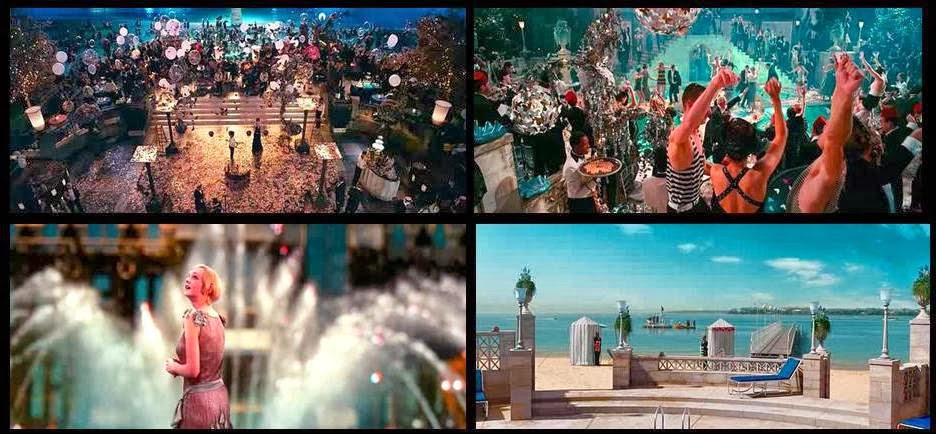
Based from the novel The Great Gatsby written by the American author F. Scott Fitzgerald, the 2013 The Great Gatsby movie was the fifth film adaptations of the said book since 1926. The most recent Gatsby film was casted by Leonardo Di Caprio as Jay Gatsby and Tobey Maguire as Nick Carraway, of whom I could say, were well fitted for their roles. They both did a great portrayal here, especially Leo, who had excellently brought Jay Gatsby to life from the most dominant to the least details of him. It wasn’t a surprise at all that Leo had given us here a marvelous act, aside from the fact the he was my teenage crush, nothing could be really denied about his greatness as an actor. Like in his other movie performance, he had given his self away here in The Great Gatsby to provide room for the role he would be playing, which is the role of Jay Gatsby – who was distinguished for his peculiarity, sophistication, lavishness, and mystifying charm. Leo had justified the sometimes firm and sometimes dithering attitude, the presentation of sugar-coated personality and the bared one, the unmatched passion and effortless charm that all contained in Jay Gastby’s unpredictable nature.


The film as told in the book concerned the story of young millionaire Jay Gatsby and his undying love for Daisy Buchanan. The entire story was looked through the perspective of Daisy’s cousin, Nick Carraway who was also the narrator in the movie. By following in precise details on what were being described in the novel, the viewers would surely enjoy the extravagant sights of the gaudy and fanciful Long Island where Gastby’s mansion was located.

The developments of the characters were carefully made from the physique features to the clothing fashion and the manners that should be acted. Daisy Buchanan and Jordan Baker here were depicted as perfectly as they were described in the book – satiated with grace and elegance, Daisy and Jordan were the perfect epitome of the sweetest and posh ladies who belonged in the superior society of their era.

The film was created to be a complete parallel movie version of the book, delivering the story through Nick’s views. This brought both the good and limited effects though – good to the sense that the film balanced the standpoints of the audiences, who were seeing through Nick’s spectacles. Nick was the type of person who tried to reserve his judgments for as long as he could stand it – and this in turn, influenced the audiences’ notion as well. However a balanced viewpoint quiet has the tendency to spoil the emotions that are being built up along the progression of the movie. Also, the narration style limited the film on its great potential to bring the chronicle in its stunning climax, because it somewhat subdued the supposedly peak of the story. Nevertheless, that was really how the story went in F. Scott Fitzgerald’s book, and the filmhad just followed  it accordingly.

I have watched the movie first before I got to read the book. After I finished the novel I noticed some parts that weren’t included in the movie’s ending – appearance of Jay Gatsby’s father and the funeral scene that really made me feel so heavy at heart while I was ready it. Maybe, if they have included it in the film as well, they could have done probably a more sensible ending because the father’s appearance and statement in the novel had shown small but significant details on the other side of Jay Gatsby’s personality.

For this wonderful movie inspired by one of the most remarkable piece in the history of literature, I will give it a rate of 7 Espresso Shots!


DECONSTRUCTING HARRY REVIEW by: Uel Ceballos

Opening in quiet an odd style, Deconstructing Harry started with a scene of a woman coming down a cab but the frame was set in a backward and forth repetitions for several of times. It actually made me think that the movie copy was corrupted or the movie player wasn’t working well but then when the motion finally proceeded to the next scene, it occurred to me that the whole thing was just a part of the treatment.

photo courtesy of wikipedia
Deconstructing Harry was directed and starred by Wooden Allen himself. It was the story of a successful writer named Harry Block who drew inspirations from the people he knew. This would later caused Harry several effects in varying level of extremity, like for his one particular novel that was blatantly based to his real life affair with his wife’s sister Lucy. Lucy was the one seen in the beginning of the movie, confronting Harry of his works and on how did it affect her relationship with her fiancé.

There were lots of flashback series along the movie. Also, several of the significant portions on Harry’s novels were being demonstrated as Harry recalled and discussed it with his therapist or with his friend. It quiet showed the deep connection that Harry had with the stories he wrote and with the characters he developed therein. This was another sort of Woody Allen’s work, wherein you would find yourself all eyes and ears to the entire movie that was a mix of flashback and present, and a combination of real (Harry’s real world) and unreal (Harry’s fiction world) situations.

Like all other Woody Allen’s movies, Deconstructing Harry explored several themes that were associated with Jews, psychological issues, and the social influences on human behavior.

Woody Allen as Harry Block
The movie was an intellectual yet amusing demonstration of the writer’s (Harry) psychological struggles, which affected his relationships with the people around him. The film looked through Harry’s personal life, invading its privacy and revealing to the audiences that in spite of his career success, Harry was just another human with lots of flaws and shortcomings. Like everyone else, he was also suffering the consequences of his mistakes and failures in life, though he has been trying to patch things up according to his basis of the right-things-to-do.

photo clip from the movie "Deconstructing Harry"
There were also moments wherein Harry was being confronted by all the characters that he had created. This gave the impression that all the characters in a book were merely pieces of the writer’s soul who breathed the fictional life in a fictional world. The book characters, in one way or another were reflections of the writer’s subconscious self, and this statement worked not only for Harry Block but for all the writers out there.

Deconstructing Harry had the entertaining twists and turns that would set you into outburst laughing and then in all of a sudden would make you empathizing with the main character. If you have seen others of Woody Allen’s movie, you would notice as well that he had a great fondness for creating a main character with inclination to writing just like in the films Midnight in Paris and Annie Hall wherein the main characters were also writers.


Woody Allen is such a laughing deity who always impart to his audience a fair amount of laughing potion and a great share of substantial thoughts. For this movie that was nominated for Academy Award for Best Writing, Screenplay Written Directly for the Screen, I will give a rate of 8 Espresso shots!


Saturday, October 19, 2013

ANNIE HALL, a truly nourishing masterpiece by: Uel Ceballos

Watching any of Woody Allen’s films will really get you glued on your seat, all eyes and ears to everything that’s happening on the screen. Surely, you wouldn’t want to miss any of his brilliant lines which are often delivered in various brainy humorous ways.

photo courtesy of Wikipedia
Annie Hall is a 1977 American romantic comedy film that starred Woody Allen himself. He was also the director and co-writer of the film, wherein you can see the Woody Allen’s style of flashback treatment and more of the significant dialogues approach than the action-show-off kind of film story-telling. The entire film is more of conversations, about 70% telling and 30% showing. But with a highly credited director like Woody Allen, the approaches never lack the necessary imagery to form the pictures in the audiences’ view even without literally showing it. You definitely hear it and feel it. You listen to every words, laugh at every humor, sympathize with the characters demises and you will just realize that you’re already hooked on it. Mainly for the reason that Woody Allen never just write the lines, but he write it with full substances. So much substances actually that you will be amazed on how did Woody Allen came to include somewhere in his script about Marshall McLuhan, Rolling Stone, David and Bathsheeba, The Sorrow and the Pity, the Wicked Queen in Snow White and even stereotyping line that compared L.A to Munchkinland!

Annie Hall is a full romantic comedy type with significant quotes that will leave you pondering at the end. Woody Allen who played Alvy Singer here has been trying to figure out why his relationship with Annie Hall has failed to work out. The film gets back to the earlier parts of Alvy’s life where he had the first two relationships before Annie, the first time he and Annie met in a badminton, their lives together as partner, the fights they’d been through and the differences they’d discovered during the period of being together.

Of course, another thing that makes Annie Hall exceptional is the classy musical scoring that set the film in a very romantic mood. The psyches of the film’s characters are marvelously developed and the comical lines being thrown are partly satirical but in a pleasantly amusing manner. There are also lots of remarkable techniques being used such as Alvy Singer breaking the fourth wall, addressing the audiences directly by facing and talking straightly to the camera. Woody Allen has obviously reflected here lots of the remarkable artists’ influences on him, definitely we already know it as the Woody Allen’s style when the flow of script draws so much inspiration from literary works, philosophical ideas, Judaism, and psychological issues.

Annie Hall is such a beautiful movie that will give you good laughs and will set you internalizing right after. Truly a nourishing film, this one is more than just your ordinary romantic comedy movie. This is a real masterpiece that hits something deeply onto your heart and mind. So I suggest you also watch this one and tell me then if I'm telling the truth.

For this one, I will give it a rate of nine shots of espresso. Cheers to quality movie!


Thursday, October 17, 2013

INSIANG -- The truth, the real and the classic by: Uel Ceballos

photo clip from the movie Insiang
Set in the slum area of the country, Insiang was opened with the montage of a depressed location in its different shots and angles. Lino Brocka had shamelessly shown here the Philippines in its worse poverty-stricken state. It was released in the year of 1976 during the Martial Law period (under Marcos regime). Just when the first lady Imelda Marcos stood firmly to her beliefs of “the truth, the good, and the beautiful” and thereby claiming the duty to act as the star to light the poor men’s way, Lino Brocka and Mario O’ Hara boldly made a film that demonstrated the Philippines in its ugliest and worst condition. Insiang not just challenged Imelda’s principle but slapped hardly the administration as the film frankly stated the real circumstances in the country.

photo clips from the movie Insiang

Insiang told the story of a pretty young woman who strove hard to get the affection of her mother. Her father left them for another woman and her mother so bitter and infuriated had diverted her grudges onto Insiang. The film was made richly with interesting conflicts and it was bombarded with poverty issues,which included the effects it had on each member of the society. The story of Insiang was made with attention-grabbing plot that would hold you still on your seat up to the last minute of the movie. This dramatic film strongly stirred sympathy for Insiang who was harshly challenged by fate, which left her seeking for revenge.

Hilda Koronel as Insiang
Actress Hilda Koronel had given us here a knockout performance, as she not only excellently portrayed the character but proven as well that no other actresses in her generation would be more fitted for the role but she alone. Kudos to the whole casts and to the production team, whom with all their joint efforts had made the film a big hit that Insiang became the first ever Filipino film to go into the Cannes Film Festival. Its entry to Cannes did not win the favor of the Marcos but the administration barred instead the showing of film in France. Small wonder why the Marcoses wouldn’t want to show off the film in the festival where other foreign countries would be present – Insiang described Philippines in ways that didn’t complement to Imelda’s own version of “the truth, the good and the beautiful”. However, just as the movie was brazenly produced and shown in the Philippines, there was nothing indeed to stop the production team especially by that time that they had already gotten the attention of one of the most prestigious films festival in the world. In spite of the prohibition of Marcos to bring the movie to France, the producer had bravely sneaked the disc by carefully hiding it in her baggage and flying Insiang to the Cannes Festival.

It has been three decades now since Insiang was first released, but until today, you can still see those same sceneries that you have seen demonstrated in the 1976 movie. It seemed like Philippines has still a long way to go before it could finally lessen if not eradicate the issues of poverty.

For this classic Filipino film that blatantly discussed the society’s issues even if it could mean threat and danger to the lives of the whole production team, let’s drink to it with the perfect rate of 10 shots of espresso!


Movie details:

Title: Insiang
Director: Lino Brocka
Writer: Mario O'Hara, Lamberto E. Antonio 
Casts: Hilda Koronel, Mona Lisa, Ruel Vernal, Rez Cortez

Friday, October 11, 2013

"Hilary and Jackie" and the effect of biographical film by: Uel Ceballos


photo courtesy of Wikipedia
Whenever I’m thinking back of the time I first watched the movie “Hilary and Jackie”, I remember as well the emotional effects that it had on me. Deeply moving, this 1998 British biographical film told the life of two sisters Hilary and Jackie Du Pré as based on Hilary Du Pré’s memoir A Genius in the Family. 

The movie was luxuriously poignant and emotionally disturbing that it even reaped criticisms from Jackie’s colleagues, giving various reactions on how the film over-sensationalized the private life of the once celebrated British cellist.

Hilary and Jackie left its viewers heavy-hearted, the after-effect lingered for some time and the surge of emotional reaction was quite impossible to resist. With the film’s exceptional cinematography, brilliant post-production, excellent actors and well-written screenplay, the director Anand Tucker and screenwriter Frank Cottrell Boyce had brought us a refined film that gratified not only one's appreciation of the classical music but one's emotional lewd and admiration of the virtuosi as well. 

Hilary and Jackie, growing up together with their mother teaching them music – Hilary on flute and Jackie on cello – gave the film an engrossing start-up while showing the two sisters improved and grown on their talents. Along the headway of the movie, the rivalry’s started to build up, but as they reached their adulthood it was Jackie who pursued international stardom while Hilary settled  peacefully as a married woman and a mother to four children. The conflict eventually showed up when Jackie suffered from emotional breakdown, and her elder sister Hilary helped to ease her nervous crash-down by giving her (Jackie) consents to have an affair with her (Hilary) husband. This is one of the most disturbing parts of the story, with Hilary’s approval on such thing that she was even the one who convinced her own husband to do it for the sake of Jackie’s therapy. The entire story alone is already effortless in gaining controversies, much more if demonstrated into film and shown worldwide thus we couldn’t really blame those who protested against it, particularly Jackie Du Pre’s husband, Daniel Barenboim.

Hilary and Jackie was shown in split points of view, the first half was of Jackie’s and the second half was of Hilary’s.  The treatment used has highlighted both the perspectives of the two sisters – making the viewers sympathized on both the sisters’ emotional struggles. The actresses Rachel Griffith (Hilary) and Emily Watson (Jackie)indeed provided us a knockout acts, making the film a historical hit which earned it awards and criticisms.

As much as I wanted to narrate the entire chronicle, to give the complete account of the sisters’ lives, I do still have the sense of control to not divulge the whole story. I don’t want to deprive you of the same unforgettable feeling I had when I saw the movie in progress, with the twists unfolding and the conflicts arising. 

Thus, I will now leave the rest of the details for you to see, you may want to watch it as soon as now.

For Hilary and Jackie, I will give the movie a rating of 7 shots of espresso.  


Thursday, October 10, 2013

MAGNIFICO -- one of the best top Filipino movies by: Uel Ceballos

Movie poster from Wikipedia
One of the best top Filipino films, Magnifico is truly a masterpiece that brought its viewers to excessive tears. However, this acclaimed tear-jerker movie didn’t overdo the sentimentality just for the drama’s sake but it let the whole story and the emotions build itself naturally until to such moment that you just couldn’t resist the effect any longer.

Director Maryo J.Delos Reyes and writer Michiko Yamamoto created the film with naturalistic approach. Demonstrating the harsh realities of life and the way a young boy like Ikoy viewed and interpreted it. Magnifico not only showed the life conditions of Ikoy’s family but the entire film also painted the bigger picture of the impoverished lives that were common in the major areas of the country, including the town where Ikoy’s family lived, a town that lived in average and simplicity.

The film told the story of a family with a son who losses his scholarships, a daughter with cerebral palsy and a son, name Ikoy who may not have a good scholastic record like his elder brother but blessed with a good heart that made almost all the people drawn towards him. The story went on how Ikoy, being still a child, already bothered himself about helping to ease his parents’ burdens.  With Ikoy seeing his sick Lola and hearing his mother ranted about the costly burial for the old woman’s expected death, he sought ways to resolve the problem. Together with his bestfriend, Carlo, they worked their ways to the preparations of all things that would be needed for his Lola’s anticipated goodbye.


photo clips from the movie "Magnifico"
Magnifico is amiable on its natural flow and effortless humor, but it became much more remarkable due to its unpredictability. The sudden gush of emotions that the viewers haven’t surely expected is one of the film’s best surprises. Ikoy didn’t just enliven the hopeless town with his positive spirit but he cheered the viewers as well on whatever it is that they may be going through. Through the good hearted character of Magnifico, the film leaves us the lessons that we can deal with any of the life’s hardships as long as we stop looking at things in too much complicated ways.  

For this magnificent multi-awarded Filipino film, let’s drink to it with 8 shots of espresso!!!


Wednesday, October 9, 2013

LES CHORISTES and the magic of their voices by: Uel Ceballos

Movie poster from Wikipedia
We have just celebrated the World’s Teachers’ Day last October 5. It reminded me of my teachers way back in grade school, high school, college and up to the times that I was already working where I continued meeting new mentors. They all imparted lessons that are too precious and valuable to lose, thus I’m keeping them in my heart, looking back to those words of wisdom whenever needed. 

Most especially, I remembered those teachers who have greatly inspired and influenced me to what I am now. 

It has brought me then to discuss to you this teacher-inspired film that is included in my list of best movies—the 2004 French Drama Film “Les Chorites”.


photo clip from the movie "Les Choristes"
I must admit, I cried at the end of this movie not because of the film’s sentimentality, but because of the connection built up between me and the characters. The director Christophe Barratier, with all the casts and workers of the movie, managed to break the fourth wall that divided Les Choristes from its audiences.  The film in fact, brought out the heartfelt feeling to its viewers without overdoing the drama of the story. The film is packed with natural humor and emotions that it just likes spicing up the entire movie with the exact ingredients under the sufficient stove heat.

photo clip from the movie "Les Choristes"
Les Choristes is the story of Pierre Morhange and the life he spent in a boarding institution way back in the year 1949. The school Fond de L'Étang was a correctional institution for “difficult” boys, that it would really takes a lot of patience and strong will for someone to manage the situations there and teach the students. But new teacher, Clément Mathieu has brought a new hope by using music to tame and change the kids in the institution. The process however, is really difficult but Mathieu’s good intentions was well paid off when soon enough he managed to form an all boys choir from those ill-mannered, unmanageable bunch of students. He strongly believed that the kids weren’t as hopeless as what their principal was thinking.

 Jean-Baptiste Maunier as Pierre Morhange
photo clip from the movie
One notable feature about this film was the casting of students who were not professional actors but did a really remarkable job in getting into the hearts of their viewers. The lead character Pierre Morhange was played by Jean-Baptiste Maunier who was a real singer from the French choir Les Petits Chanteurs de Saint-Marc. The rest of the kids were auditioned from primary and secondary schools near the location of the film. The kids were really passionate to learn about acting and music that it resulted to their very astonishing performance in Les Choristes. Surely, you will love the music, the sound of the children’s choir, the exceptional voice of Jean-Baptiste Maunier – all of these were so heavenly to the ear that I really got goose bumps when I heard their angelic voices.

The treatment used for the flow of story began from old Pierre reminiscing back to his childhood days by reading through the diary of his teacher, Clément Mathieu. Then the scene cut off to flashback, with the entire story already in the point of view of Mathieu. You would certainly lose yourself in this film’s simplicity and heartwarming nature. If you have been moved by the teacher-inspired film Mr. Holland’s Opus then you must see this one also! The casting, the setting, and the psychology of the characters were all carefully developed and the film itself was excellently made that it was nominated in 77th Academy Awards and in other award-giving bodies.


For this movie review, the film is worthy of 10 espresso shots rating! Better see it yourself to find out why! Enjoy watching!


https://www.facebook.com/Now-Brewing-539673826127554/?ref=hl